

Currently an Extern @HydroficientAspiring SOC Analyst
I’m a driven recent graduate eager to apply my knowledge in IoT and cyber defense. Seeking opportunities to grow and succeed in the tech industry.
Works
Dive into my portfolio showcasing my journey and projects
About me
I’m a driven recent graduate eager to apply my knowledge in IoT and cyber defense. Seeking opportunities to grow and succeed in the tech industry.
Recent bachelor's graduate with a passion for cybersecurity. I enjoy tackling technical challenges, learning new technologies, and building projects that strengthen my skills, with experience gained through the Hydroficient IoT Cyber Defense Externship and personal projects.
Externships
Hydroficient IoT Cyber Defense Externship
Hydroficient
Education
California State University, Long Beach
Bachelor's Degree, Computer Science · Class of 2026
Skills
Hydroficient · Jul 2026
Hydroficient IoT Cyber Defense Externship
Build, hack, and defend real IoT infrastructure, then hand your security playbook to an actual company. You’ll launch realistic cyberattacks, from spoofing and replay attacks to unauthorized shutoffs, and implement defenses like TLS and mTLS.


Overview
During my Hydroficient IoT Cyber Defense Externship, I built, hacked, and defended IoT infrastructure while creating a comprehensive security playbook. I executed realistic cyberattacks and implemented robust defenses to protect critical systems. This hands-on experience equipped me with essential skills in IoT security and threat management.
What I did
Throughout this externship, I focused on enhancing IoT security by understanding system vulnerabilities, developing security measures, and creating monitoring tools. Below is a summary of key tasks I accomplished during the program.
Project 1: Understanding IoT Systems & Threat Modeling
I analyzed real-time data streams from The Grand Marina Hotel, gaining a comprehensive understanding of IoT systems and vulnerabilities. By mastering the CIA Triad and STRIDE methodology, I delivered a detailed threat model that identified critical weaknesses.
Project 3: Building an Insecure MQTT Pipeline
I constructed a complete IoT pipeline to understand operational vulnerabilities. This involved setting up sensors, a broker, and subscribers. I intercepted unencrypted traffic, recognizing firsthand the dangers of insecure MQTT protocols.
Project 5: Enforcing Device Identity & Provisioning
I enhanced the security of my pipeline by implementing mutual TLS (mTLS) to ensure that only authorized devices could connect. I developed a provisioning policy document to authenticate devices effectively, closing a critical security gap.
Project 7: Building a Real-Time Security Dashboard
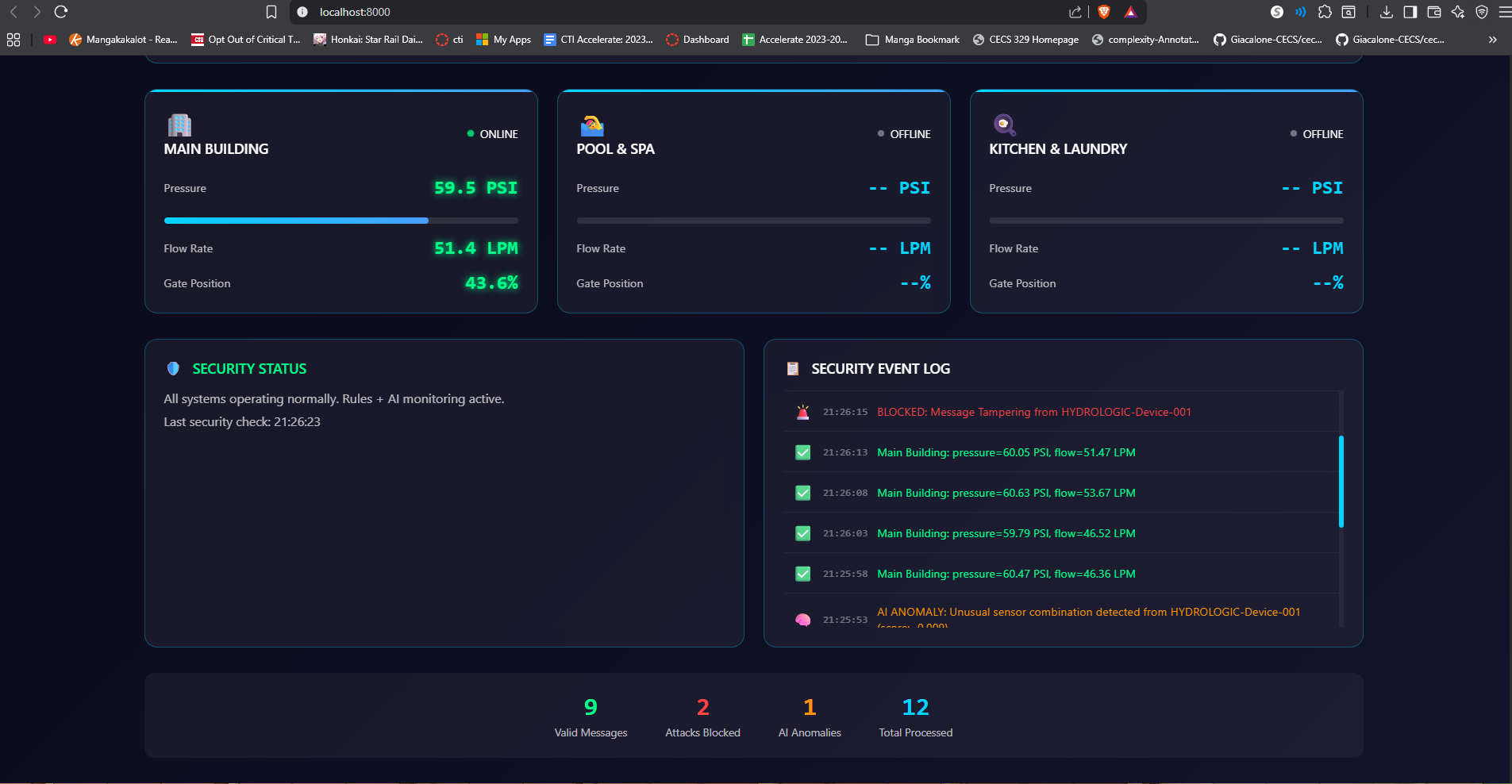
I created a real-time security dashboard that visualized live sensor data and provided alerts on potential attacks. This comprehensive tool allowed the operations team to effectively monitor the Grand Marina's water system, culminating in a detailed presentation of my security measures.
Project 2: Learning Python for IoT Security
I learned Python fundamentals and applied them to analyze IoT security data. Using Google Colab, JSON, and Pandas, I developed scripts to analyze HYDROLOGIC sensor data, equipping myself with essential programming skills for future security tasks.
Project 4: Securing the Pipeline & Measuring the Cost
After identifying a vulnerability in my MQTT pipeline, I implemented TLS encryption to secure data transmission. I conducted experiments to assess security-performance tradeoffs, resulting in a secured system and a professional security assessment for the hotel's General Manager.
Project 6: Defeating Replay Attacks
I built defenses against replay attacks by integrating timestamp validation, sequence counters, and HMAC message signing into my mTLS pipeline. This ensured each message was verified for freshness and uniqueness, significantly strengthening overall security.
Project 8: Adding AI-Powered Anomaly Detection
I developed an AI-powered anomaly detection system that enhanced my dashboard's capabilities. This involved training an Isolation Forest model to identify unusual patterns in sensor data, which improved the system's predictive abilities against potential threats.
